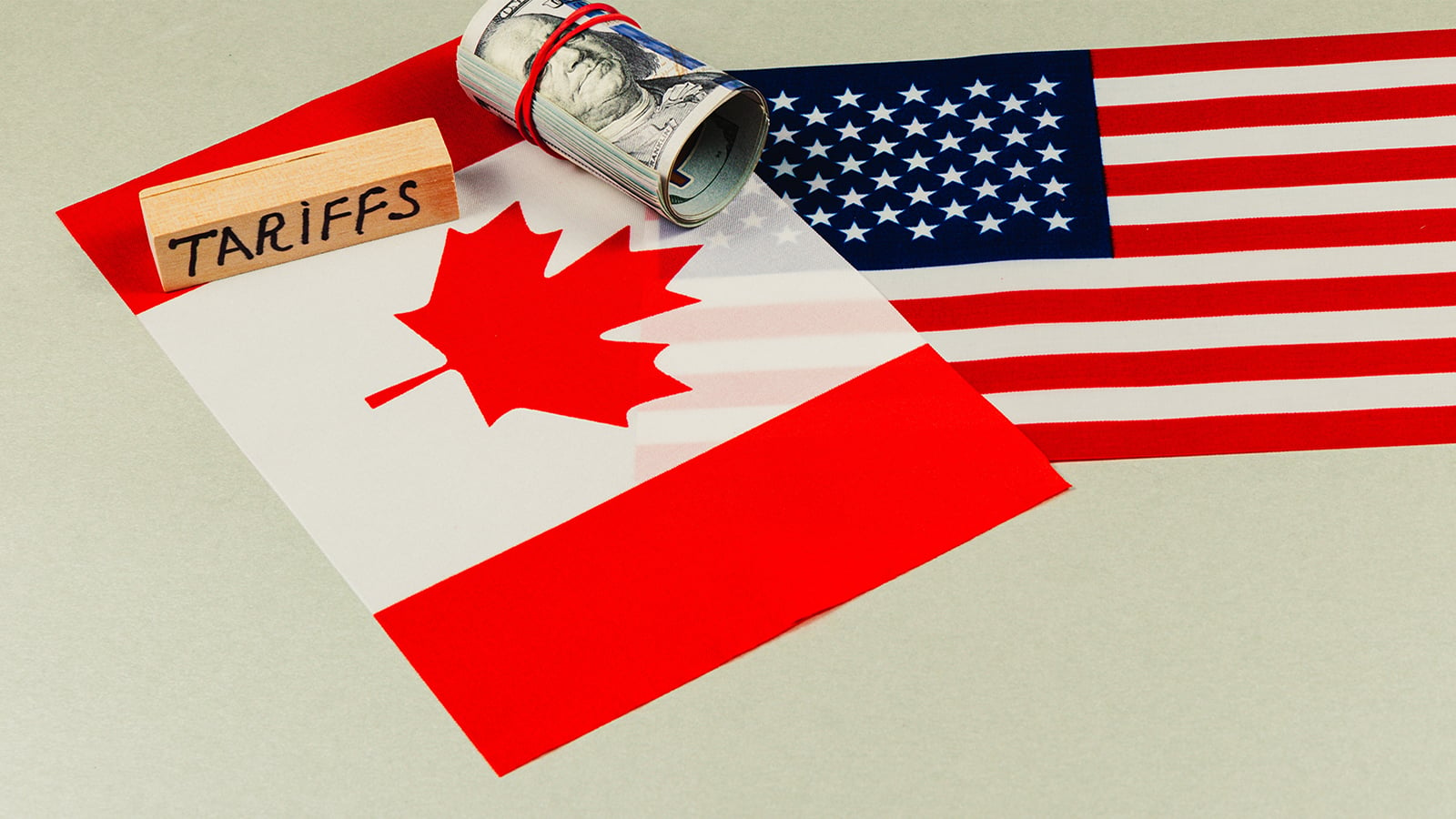
Upcoming U.S. tariffs on certain Canadian imports are poised to add new cost and planning risks for multifamily builders, particularly in wood-frame and build-to-rent segments, according to Matt Long, a partner at Phoenix-based developer and contractor Porter Kyle. He notes that three trade proclamations signed under Section 338 of the Tariff Act of 1930 will take effect on August 19, 2026, imposing a 50% duty on a range of goods, including cement and plywood, even when those products otherwise qualify for duty-free treatment under USMCA.
Long says the most immediate construction impacts fall on material categories that had largely escaped prior tariff rounds, such as cement, wood and paper products, machinery and tools, and electrical equipment. By contrast, lumber, steel, aluminum, and copper continue under existing Section 232 regimes and are not subject to the new Section 338 action. He emphasizes that beyond direct price changes, the broader issue is uncertainty: production homebuilding and build-to-rent projects are typically underwritten 18 to 36 months ahead, and a 50% tariff applied with roughly 30 days’ notice pushes contractors to embed larger contingencies into bids, raising project costs whether or not duties are ultimately paid.
On cement, Long explains that exposure in the Southwest is somewhat limited because the region relies heavily on regional and Mexican supply rather than Canadian imports. However, he cautions that cement is repriced on a national basis. When Canadian-sourced material into northern markets becomes 50% more expensive, domestic producers gain pricing leverage across the country, and that dynamic can eventually influence costs in Phoenix as well.
Lumber and electrical infrastructure pose different challenges. Long points out that most residential product in Arizona, including townhomes and build-to-rent communities, is slab-on-grade, wood-frame construction, making framing lumber a major line item. Canadian softwood lumber is exempt from the new Section 338 duties only because it already carries about 35% in combined antidumping, countervailing, and Section 232 duties, while still accounting for roughly a quarter of U.S. consumption, leaving no new relief for one of the largest inputs in Southwest housing.
Transformers and switchgear are another pressure point. Long notes that these components already had some of the longest lead times in the industry, and that utilities in fast-growing markets like Phoenix are straining to support both data centers and new residential development. A 50% duty on Canadian-made equipment and components, he says, threatens to tighten an existing bottleneck in power infrastructure.
In Long’s view, costs ultimately flow downstream. The importer of record pays the tariff, suppliers pass through higher prices to contractors, and contractors attempt to push those increases on to builders and owners. In for-sale housing, he argues, affordability constraints limit how much can be passed through to buyers, resulting in margin compression and some projects failing to pencil. Build-to-rent operators, he adds, are even less able to recoup higher costs when rents are determined by competitive market conditions and, in supply-heavy markets such as Phoenix, owners are already relying on concessions rather than rent growth.
Long cites National Association of Home Builders survey data that attributes around $10,900 per home to recent tariff actions, with independent projections estimating $14,000 to $20,000 per home in added cost by 2027 if Canadian material duties persist. He characterizes the household as paying twice over time, first through higher prices and later through scarcity caused by reduced new supply.
He also places the new tariffs within a broader policy backdrop that already includes Section 232 duties on steel, aluminum, copper, and lumber, roughly 35% combined antidumping and countervailing duties on Canadian softwood lumber, and a 10% surcharge on Canadian goods implemented earlier in the year. That mix has turned country-of-origin diligence into a core estimating function, rather than a back-office exercise.
Long highlights several near-term watchpoints. He notes that the U.S. Department of Commerce is expected to issue its final determination on Canadian softwood lumber in late August, which could reduce the combined antidumping and countervailing duty rate by about 10 percentage points and offer some relief on framing costs at the same time the new Section 338 duties are scheduled to take effect. He also flags the risk of Canadian retaliation that could raise costs for U.S.-made products moving north and further complicate supply chains for cross-border suppliers.
Finally, Long situates the tariff issue against a slowing development and capital backdrop. National single-family build-for-rent starts declined by roughly 19% in 2025 and fell again in early 2026 as higher financing costs constrained new deals. He argues that tariff-related uncertainty is layering onto what he describes as an already frozen capital environment, potentially deepening a supply gap that is likely to emerge in the 2027–2028 period across the Southwest and other markets.