**Post-FOMC Analysis: Divided Outlook and Sticky Inflation Risks**
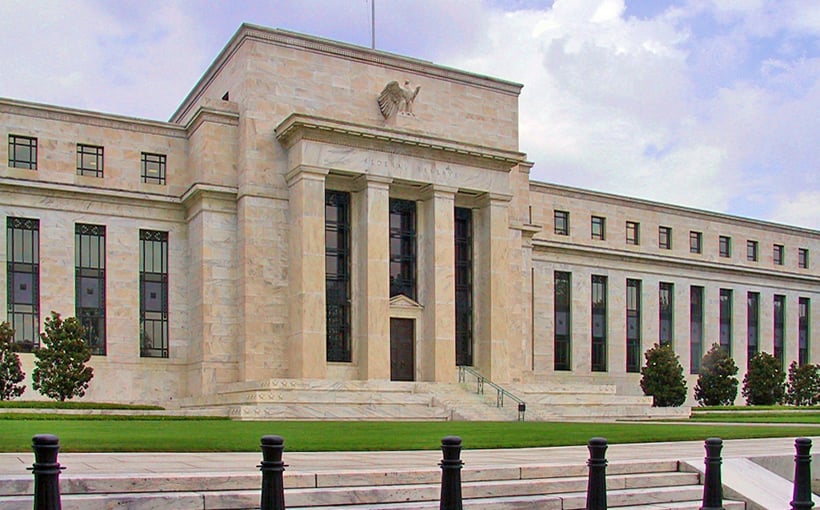
The Federal Reserve has opted to hold interest rates steady for the fourth consecutive meeting, underscoring its cautious, data-dependent approach amid growing economic uncertainty. Policymakers are grappling with a complex mix of risks, including slowing economic momentum and persistent core inflation pressures. The latest Summary of Economic Projections (SEP) reveals a widening divide within the Federal Open Market Committee (FOMC), with a notable portion of its members now forecasting minimal or no further rate cuts in 2025.
Market expectations still generally anticipate rate reductions, but the Fed’s own projections indicate any easing will likely be slower and more modest than previously thought.
Since the last FOMC meeting on May 7, the economic environment has become more nuanced. While global trade policy concerns have eased, rising geopolitical tensions have pushed oil prices higher. U.S. equity markets remain resilient, but fixed-income investors continue to face rate volatility and increasing long-term yields. Credit spreads are steady—albeit tight—and real estate markets remain under pressure from capital market disruptions. Though sentiment surveys point to stabilization, hard economic data has softened.
Despite the Fed’s median projection still suggesting two rate cuts in 2024—totaling 50 basis points and aligning with March’s projections—the consensus behind that outlook is showing signs of strain. Among 19 Fed officials, nine now predict fewer cuts this year, with seven expecting no cuts in 2025 and two forecasting just one 25-basis-point reduction.
By 2026, policymakers generally expect interest rates to settle between 3.5% and 3.75%, a slight downgrade from March estimates. However, updated economic forecasts show troubling signs. GDP growth for 2025 has been revised downward to 1.4% (from 1.7%), while the unemployment rate is projected to climb to 4.5% and remain elevated into 2026. Crucially, estimates for core inflation—a key Fed metric—were sharply revised upward for 2025 to 3.1%, compared with 2.8% in earlier projections, with only slow improvement expected thereafter.
“Our expectation is that 10-year Treasury rates will remain higher for longer against this backdrop,” said Rich Hill, Global Head of Real Estate Research and Strategy at Principal Asset Management.
From a capital markets perspective, the Fed’s stance presents significant challenges. “While the Fed’s decision to hold rates steady comes as no surprise, it will be met with chagrin by battle-worn real estate investors who continue to navigate volatility and macro uncertainty,” said Marion Jones, Executive Managing Director at Avison Young. “A reduction in rates would have helped facilitate necessary but stalled transactions across multifamily and office sectors.”
In its official statement, the Fed described the economy and labor market as “solid,” but acknowledged that inflation remains “somewhat elevated” and that overall outlook uncertainty, though improved, “remains elevated.”
**Bottom Line:** While conditions do not yet meet the definition of stagflation, the Fed’s latest projections reveal a potentially hazardous mix of slowing growth, rising unemployment, and persistent inflation—all indicators that the economy may be trending in a stagflation-like direction.
—
Originally published by Connect CRE.