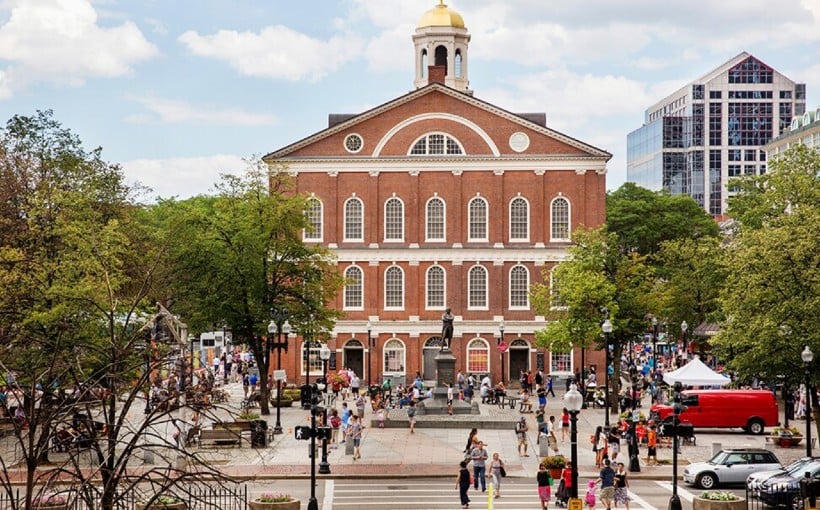
City leaders in Boston are revisiting the role of Faneuil Hall Marketplace as they look for ways to bring more local residents back to one of the city’s most visited destinations. Long known as a major tourist draw, the marketplace has seen local interest diminish, prompting the Wu administration to launch a new round of conversations about its future direction and how it can better serve Boston’s communities.
According to reporting cited from the Boston Business Journal, the city is convening a group of advisers alongside major neighboring property owners to consider what the coming years might hold for the downtown marketplace. The discussions are intended to surface ideas on how the property can remain commercially successful while evolving beyond its current identity as primarily a stop for visitors.
Mayor Michelle Wu underscored the challenge and opportunity in remarks delivered on Monday. She noted that for many residents, Faneuil Hall Marketplace has become the place you visit once, or a destination mainly associated with tourists who are spending heavily on local staples such as clam chowder or baked beans. Wu framed the city’s effort as an attempt to retain the marketplace’s historic character while making it a more authentic reflection of Boston today.
The mayor emphasized that the marketplace’s history and unique legacy can be retained even as it is repositioned. She stated that the goal is to embrace what has made the site distinctive while ensuring it supports a more inclusive and locally resonant vision of Boston. Commercial success remains part of that vision, but the administration is also signaling a desire to see the property connect more directly with local residents and everyday city life.
To help shape the path forward, the Wu administration is working with a six-person advisory board. Most of the advisers are drawn from other cities, suggesting that Boston officials are seeking outside perspectives and lessons from peer markets as they evaluate options for the marketplace. The advisory group is expected to provide recommendations on how the property can adapt over time, though specific proposals were not detailed in the information provided.
Representatives of nearby building owners are also part of the conversation. Attendees at a recent event included stakeholders from Tishman Speyer, Synergy and Chiofaro Co., signaling that owners of adjacent assets are being engaged as the city weighs potential changes. Their participation points to the marketplace’s importance within the broader downtown environment, given its role in attracting foot traffic and economic activity to the surrounding area.
While no concrete redevelopment or repositioning plan has been outlined, the early dialogue highlights the city’s interest in reenergizing a historic asset whose current appeal skews heavily toward tourists. The outcome of these discussions could influence how Faneuil Hall Marketplace functions within the downtown ecosystem, particularly in terms of how it balances visitor-driven revenue with a stronger connection to Boston’s local population.