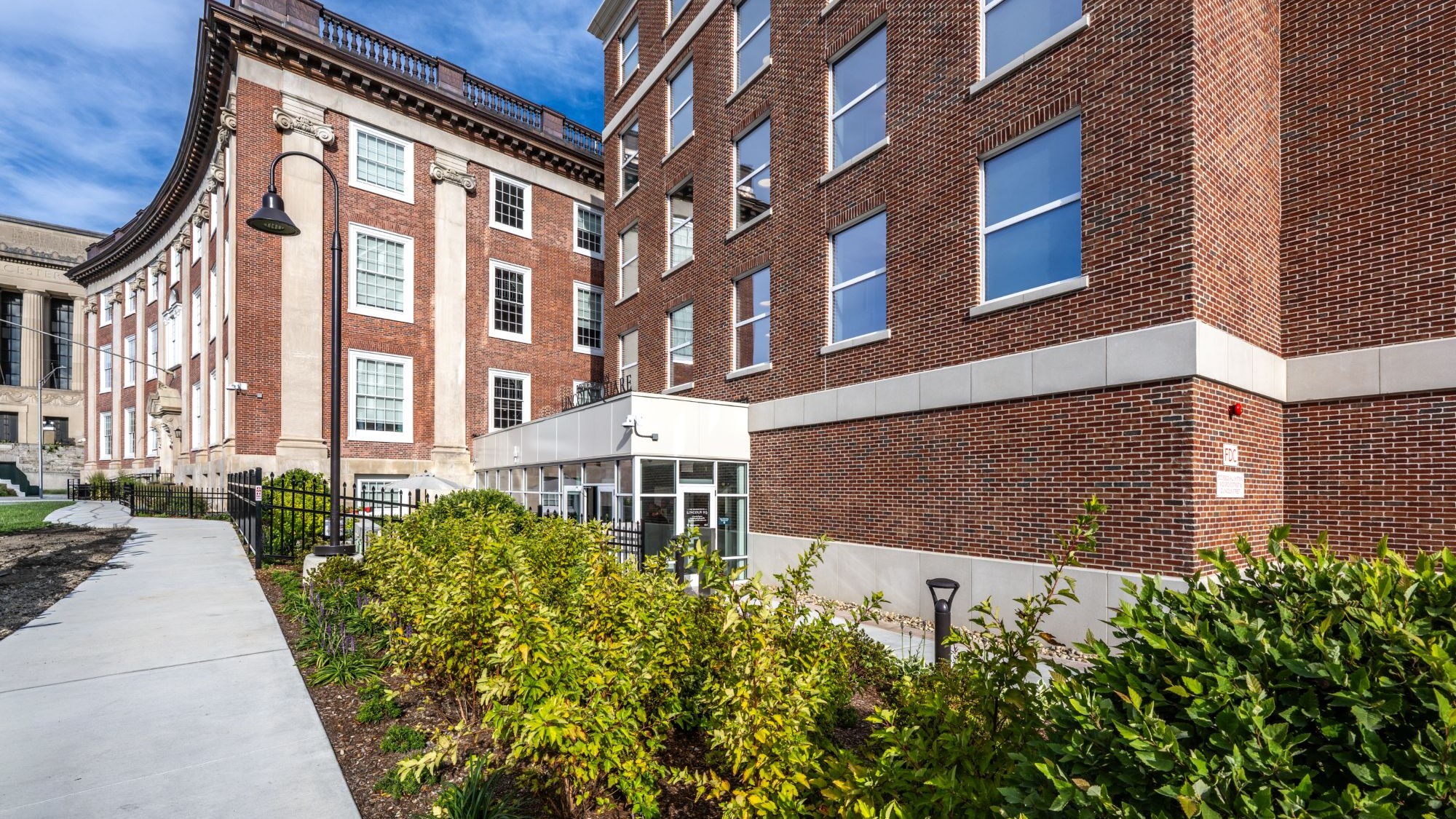
A ribbon-cutting ceremony has marked the opening of The Residences on Lincoln Square, a hybrid residential development that incorporates the historic Worcester Boys Club building into a new age-restricted community. Massachusetts Gov. Maura Healey joined Worcester city officials to celebrate the project, which combines the adaptive reuse of the former Boys Club with new construction to create senior housing and community spaces in the city.
The $51-million development from WinnCompanies delivers a total of 80 affordable apartment homes reserved for adults aged 55 and older. Sixteen apartments and community areas occupy the restored Worcester Boys Club structure, while an adjacent five-story building adds 64 new apartment units to the site. The overall design focuses on providing modern, energy-efficient housing while preserving a long-standing local landmark.
The community is fully leased at opening, reflecting strong demand for affordable senior housing in the area. According to the project details, 68 apartments are leased to households earning up to 60% of Area Median Income, with another 12 apartments serving residents earning up to 30% of Area Median Income. In addition, 11 of the units are designated as housing for residents with disabilities, broadening the accessibility and social impact of the development.
WinnCompanies CEO Gilbert Winn highlighted the significance of bringing the property back into productive use after years of planning efforts. He noted that reviving the historic Boys Club building had been a municipal priority for roughly two decades, and credited an innovative development approach and support from public and private partners for enabling the project to move forward. The completed community now provides what is described as long-term, quality housing options for older residents in what is characterized as one of the state’s most essential housing markets.
The Residences on Lincoln Square demonstrates how legacy community assets can be repositioned to address senior housing needs while maintaining local character. By blending historic rehabilitation with ground-up construction and targeting affordability across multiple income bands, the project expands the region’s supply of age-restricted housing and formalizes a new residential use for a prominent, formerly underutilized property in Worcester.