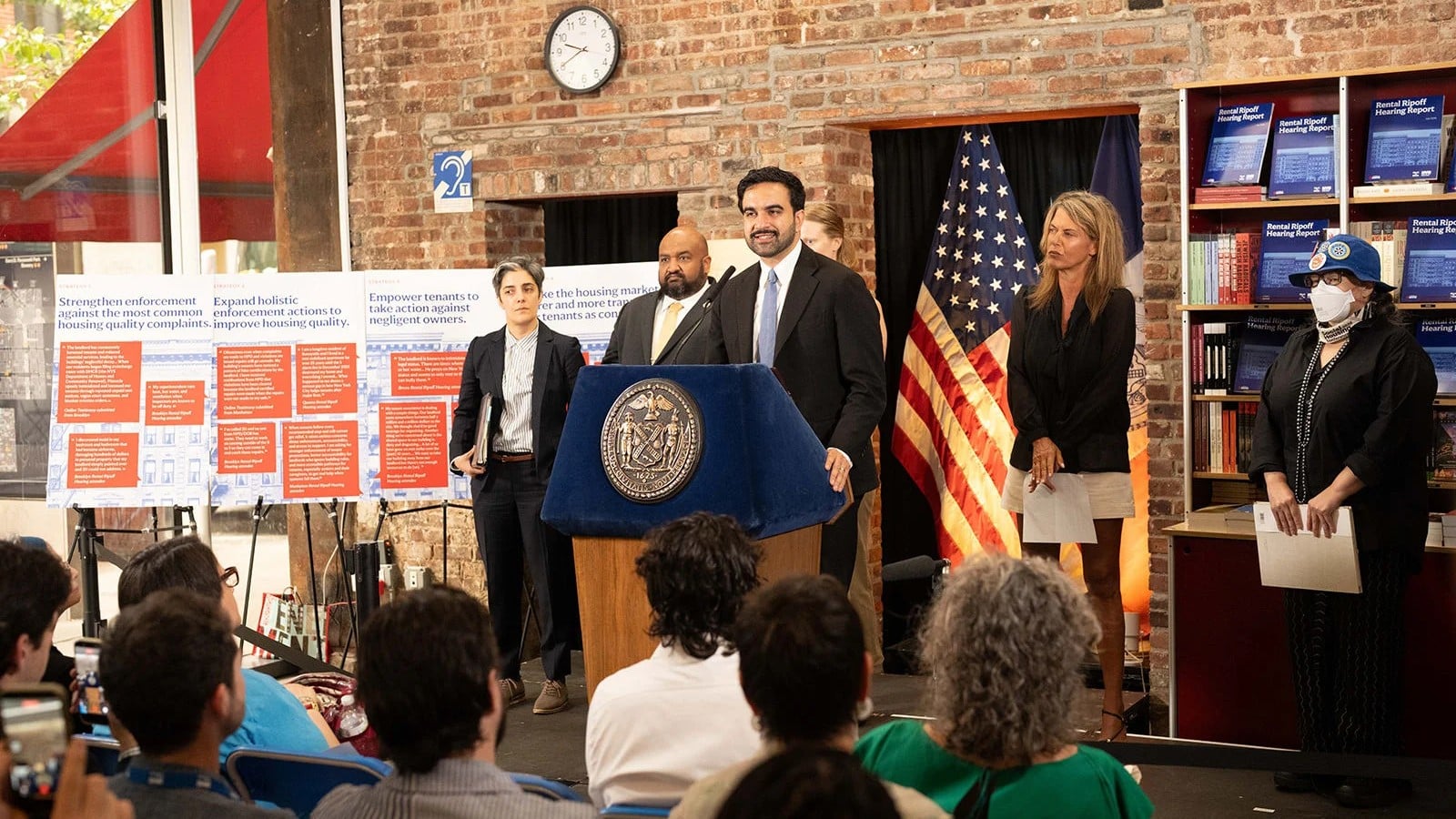
New tenant protection proposals from Mayor Zohran Mamdani are drawing sharp criticism from the Real Estate Board of New York (REBNY), underscoring ongoing tension between multifamily owners and policymakers. On Thursday, Mamdani released the Rental Ripoff Report, a package of 23 recommendations aimed at strengthening tenant rights and tightening oversight of rental housing providers.
The Rental Ripoff Report is built around testimony gathered at public hearings the Mamdani administration held across the city earlier this year. According to the administration, thousands of residents participated in these sessions, describing unresolved maintenance issues and what they characterized as nontransparent housing costs. Cited concerns included mold problems that were reportedly left untreated, pest infestations that were not addressed, and fees that tenants said were imposed without adequate explanation.
Among the key recommendations is formal recognition of tenant unions, along with measures to expand tenants’ ability to organize and bargain collectively. The proposals envision collective negotiations over building conditions and other shared concerns, potentially giving renters a more structured framework for engaging with property owners and managers on operational and quality-of-life issues.
The report also calls for new disclosure requirements on rental marketing practices. Under the recommendations, landlords would be required to inform prospective renters when listing materials have been modified using artificial intelligence or other digital tools. The administration frames this as a transparency measure intended to ensure that advertising accurately represents units and building conditions.
Operational systems for owners are another focus area. The proposals advocate modernizing building owner registration processes and communication platforms, with the goal of improving how the city tracks property information and interacts with landlords. Enhanced systems could affect how owners respond to compliance requirements, inspections, and enforcement actions.
On the enforcement front, the Rental Ripoff Report urges the city to fully deploy its existing authority against what it describes as repeat-offender landlords. Recommended tools include targeted inspections, stepped-up enforcement programs, and the use of litigation where necessary. The emphasis on recurring violations signals an intent to focus on buildings and ownership groups with persistent code or habitability issues.
REBNY responded with a statement from President James Whelan, arguing that the administration’s approach unfairly characterizes the broader multifamily industry. Whelan said the administration “continues to paint property owners with a broad brush, unfairly characterizing an entire industry,” suggesting that the proposals may not sufficiently distinguish between compliant operators and those with chronic violations.
Whelan also pointed to concentration of building issues in a specific segment of the housing stock. He cited a REBNY study released in February, which found that apartment buildings where 75% to 100% of the units are rent-stabilized represent only 2% of the city’s overall housing inventory but account for 57% of buildings with at least 10 Class C violations. Class C violations are generally considered the most serious, often related to conditions affecting health and safety.
This data point underscores REBNY’s contention that the most acute operational and financial challenges are occurring in heavily rent-stabilized properties. In its view, broad regulatory responses may not fully account for the unique economics and maintenance burdens in that subset of the multifamily market, even as the administration seeks stronger protections and remedies for tenants facing persistent quality-of-life issues.