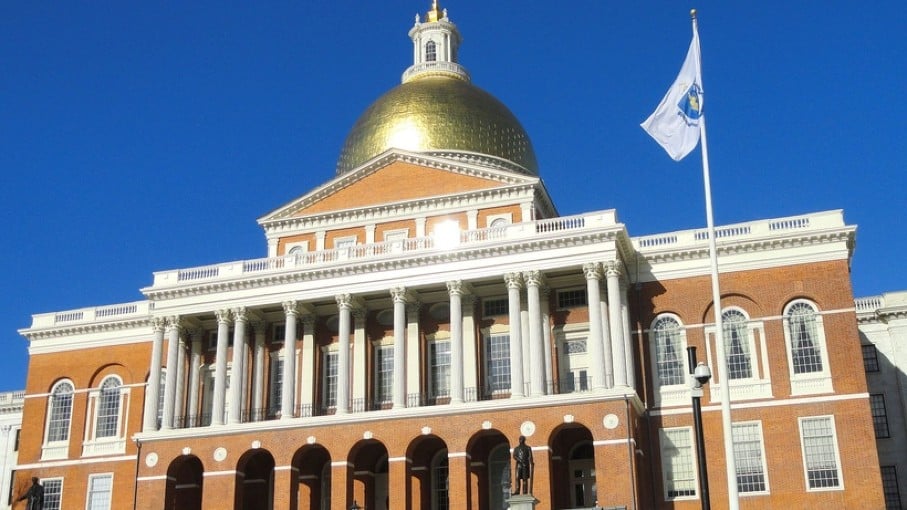
The Massachusetts House of Representatives has advanced legislation that would give churches, synagogues and other religious institutions new authority to develop housing on their properties. The proposal, informally known as the Yes in God’s Back Yard (YIGBY) bill, is packaged within a broader $561-million economic development and competitiveness bond bill. Before the measure can take effect, it must still be approved by the state Senate and signed by Gov. Maura Healey.
As outlined in coverage cited from the Boston Business Journal, the YIGBY bill would enable qualifying religious organizations to move forward with housing construction on land they already own, even when local zoning rules might otherwise prevent residential development. Under the proposal, these institutions would be able to bypass the local special-permit process that can add time, uncertainty and cost to new housing projects. The change is designed to unlock underused religious land for residential uses while reducing some entitlement barriers.
This legislative effort sits alongside a set of existing statewide and local housing initiatives in Massachusetts. The article notes that the YIGBY measure would complement a program aimed at developing new housing on surplus state-owned land. It would also build on municipal efforts, including Boston’s office-to-apartment conversion incentive program, which is intended to bring more residential units to market by repurposing older office assets.
The Citizens’ Housing & Planning Association (CHAPA), a statewide advocacy and policy organization, has publicly endorsed the YIGBY bill. CHAPA’s communications director, Jenna Connolly, welcomed the House vote and described the measure as one of several innovative tools needed to expand the supply of affordable housing across Massachusetts. Her comments underscore the view among housing advocates that easing zoning barriers for mission-driven landholders could be part of a broader strategy to address housing scarcity.
YIGBY’s focus on religious properties reflects the significant amount of land held by faith-based organizations, much of which may be suitable for residential development but constrained by local regulations. By giving these institutions the ability to pursue projects without obtaining special permits, the bill aims to streamline the path to creating new homes, particularly where conventional private development has been slower to take root. The measure’s progress through the legislature will be closely watched by housing stakeholders looking for scalable approaches to add units in built-out communities.
If enacted, the YIGBY framework would operate in parallel with other policy efforts targeting both public and private land, setting up a multifaceted approach to housing production. In combination with initiatives to reconfigure existing office space in Boston for residential use and to activate surplus state parcels, the legislation signals a continued emphasis on leveraging existing land assets rather than solely greenfield development. The ultimate impact on new housing creation, including the volume of multifamily units and the level of affordability achieved, will depend on how many religious institutions choose to use the new authority once the bill is fully enacted.