Midwest multifamily performance and outlook took center stage at the recent Connect Midwest Multifamily Trends 2026 conference in Chicago, where hundreds of industry professionals convened to assess how the region is positioned for the next phase of the cycle.
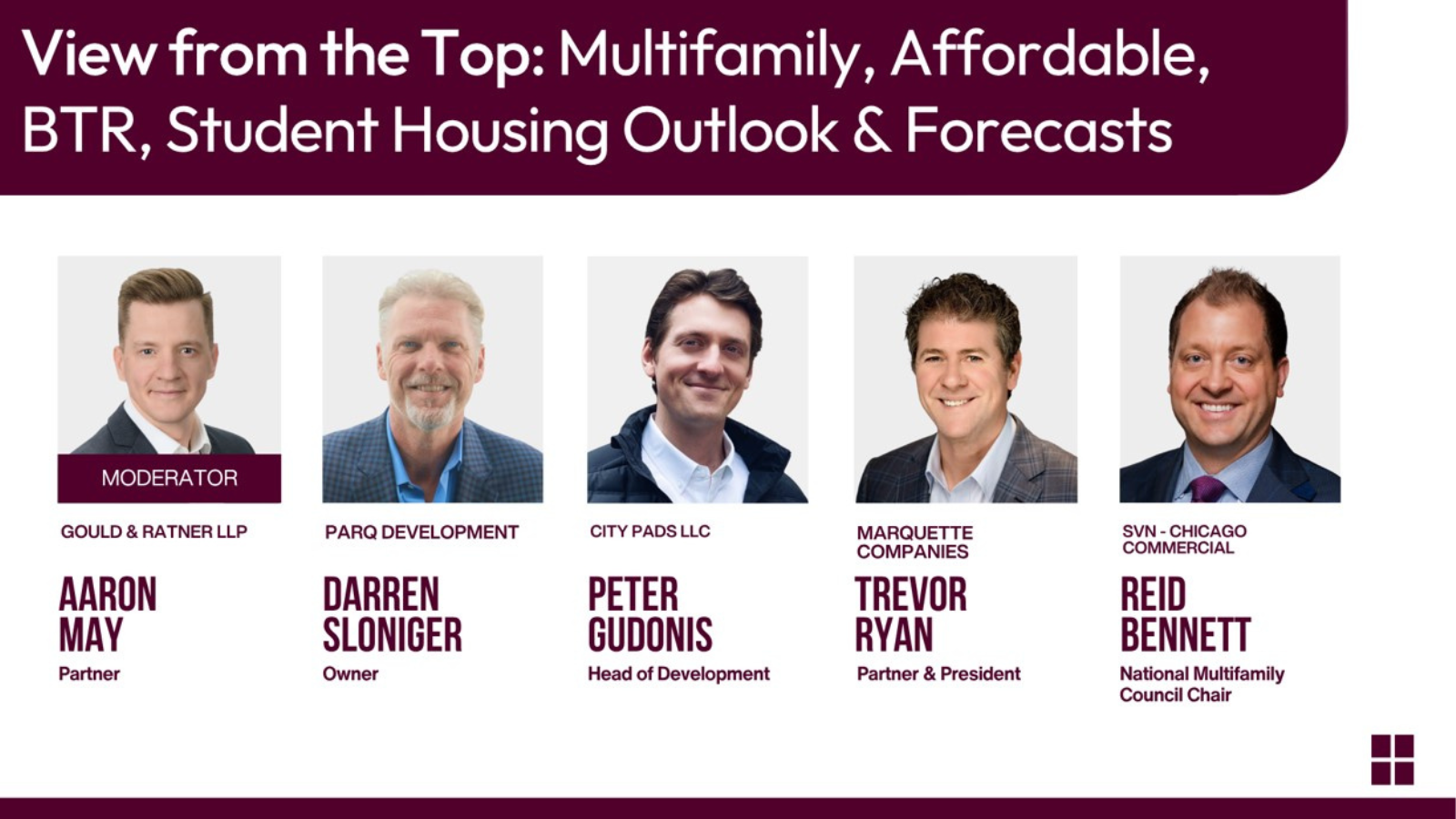
During a panel discussion moderated by Aaron May, a Partner at Gould & Ratner LLP, multifamily executives compared activity levels across the region, weighing where sales and development are most active and which locations appear better set up for near-term growth. The group contrasted urban and suburban trajectories and discussed the types of projects that are currently attracting capital and reaching the finish line.
Trevor Ryan, President of Marquette Companies, emphasized that his firm continues to see compelling prospects close to home. He pointed to Chicago, and particularly suburban Chicago, as offering some of the best opportunities in today's market. Ryan also noted that several of the company's capital partners frequently highlight other Midwest cities such as Columbus, Indianapolis, Kansas City, Madison, and Milwaukee as markets that remain firmly on their radar.
On the development front within the city of Chicago, Darren Sloniger, Founder and Owner of Parq Development, said recent tax policy has been a key factor in keeping projects viable. He explained that a new tax abatement has played a central role in making ground-up multifamily development pencil out in the current environment, effectively breathing new life into the urban development pipeline. According to Sloniger, there is a substantial pipeline of deals seeking financing, and projects with the best locations and clearest execution strategies are most likely to secure the capital they need and move forward.
From a fund perspective, Peter Gudonis, Head of Development at CityPads, described how bringing an early investment full circle has bolstered confidence. He shared that CityPads recently sold the first development from its current fund, reporting that stakeholders were pleased with the outcome and that the sale helped establish proof of concept for the firm's strategy, positioning the group for subsequent phases of the fund.
Looking ahead to potential dislocation, Reid Bennett, Senior Vice President at SVN – Chicago Commercial, focused on suburban, secondary, and tertiary markets across the region. He anticipated that these areas could experience a large wave of distress over the coming years. Bennett suggested that while such distress is likely to create significant opportunities for certain investors, it will also pose substantial challenges to work through over a period of roughly five years as owners, lenders, and market participants navigate restructuring, recapitalization, or disposition decisions.
Taken together, the panel's commentary underscored both the resilience and complexity of Midwest multifamily entering 2026, with Chicago remaining a focal point for investment while investors closely monitor policy shifts, capital availability, and emerging distress in outlying markets.