
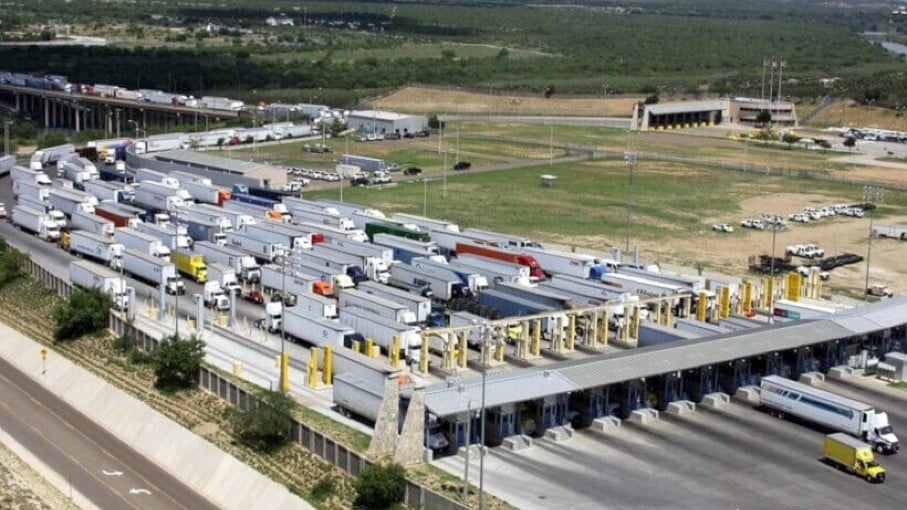
Industrial real estate tied to North American trade is facing a growing policy overhang as renewal talks around the U.S.-Mexico-Canada Agreement move past the initial July 1 review date, according to analysis from Yardi Systems’ CommercialCafe. The missed date does not end the trade pact, but it changes the framework under which it is evaluated, shifting USMCA into a rolling annual review process.
CommercialCafe reports that this procedural shift is adding a fresh layer of uncertainty for market participants that rely on long-term visibility. Industrial tenants, investors and developers have already been wrestling with questions about the agreement’s durability for more than a year, and the move to ongoing reviews is further complicating multi-year planning cycles that are central to logistics and manufacturing-focused real estate strategies.
USMCA currently governs roughly $2 trillion in annual trade, with Mexico and Canada together accounting for more than one-quarter of total U.S. trade activity, the report notes. This depth of integration means any potential renegotiation or change in terms could reverberate through distribution networks, plant locations and associated warehouse demand along key trade corridors.
While U.S. officials are described as concentrating on extracting concessions through side letters, add-ons and protocols rather than launching a full-scale rework of the pact, the outlook from Canada appears more guarded. CommercialCafe cites indications that Canadian officials are preparing for a drawn-out negotiation process that could extend for years, with the possibility that a comprehensive new agreement might not be finalized until 2029, when the current U.S. administration is expected to leave office.
Peter Kolaczynski, director at Yardi Research, told CommercialCafe that the primary concern for the industrial sector is not an immediate disruption, but the drag that prolonged talks could have on growth later in the decade. Persistent uncertainty around trade rules and timelines may discourage long-horizon investments, delay decisions on new industrial development and encourage occupiers to seek more operational flexibility rather than committing to large, specialized facilities.
The industries most exposed are those with deeply integrated cross-border supply chains, particularly automotive and advanced manufacturing, according to CommercialCafe. These sectors depend heavily on seamless movement of parts and finished goods between the U.S., Mexico and Canada, and changes to tariff structures, rules of origin or regulatory regimes could alter cost structures and location decisions.
For industrial real estate, the evolving USMCA review process underscores the importance of monitoring trade policy as a risk factor alongside fundamentals such as demand, labor availability and transportation access. Investors and developers with assets concentrated in cross-border logistics nodes or manufacturing hubs tied to North American trade flows may need to account for a wider range of policy outcomes as renewal discussions continue.