Miami-Dade County has transferred a small infill site in the Wynwood neighborhood to Cipres for a nominal price of $10, paving the way for a new affordable multifamily development in one of the area’s most expensive districts. Local land costs in Wynwood are described as so high that an affordable project would not financially pencil out at market land pricing, prompting the county to effectively donate the parcel through the discounted sale.
According to reporting cited from the S. Florida Business Journal, the lot encompasses roughly 0.16 acres and carries an estimated market value of $3.45 million. The substantial gap between market value and the token purchase price underscores the public-sector contribution embedded in the transaction and highlights the role of public land in supporting below-market housing production.
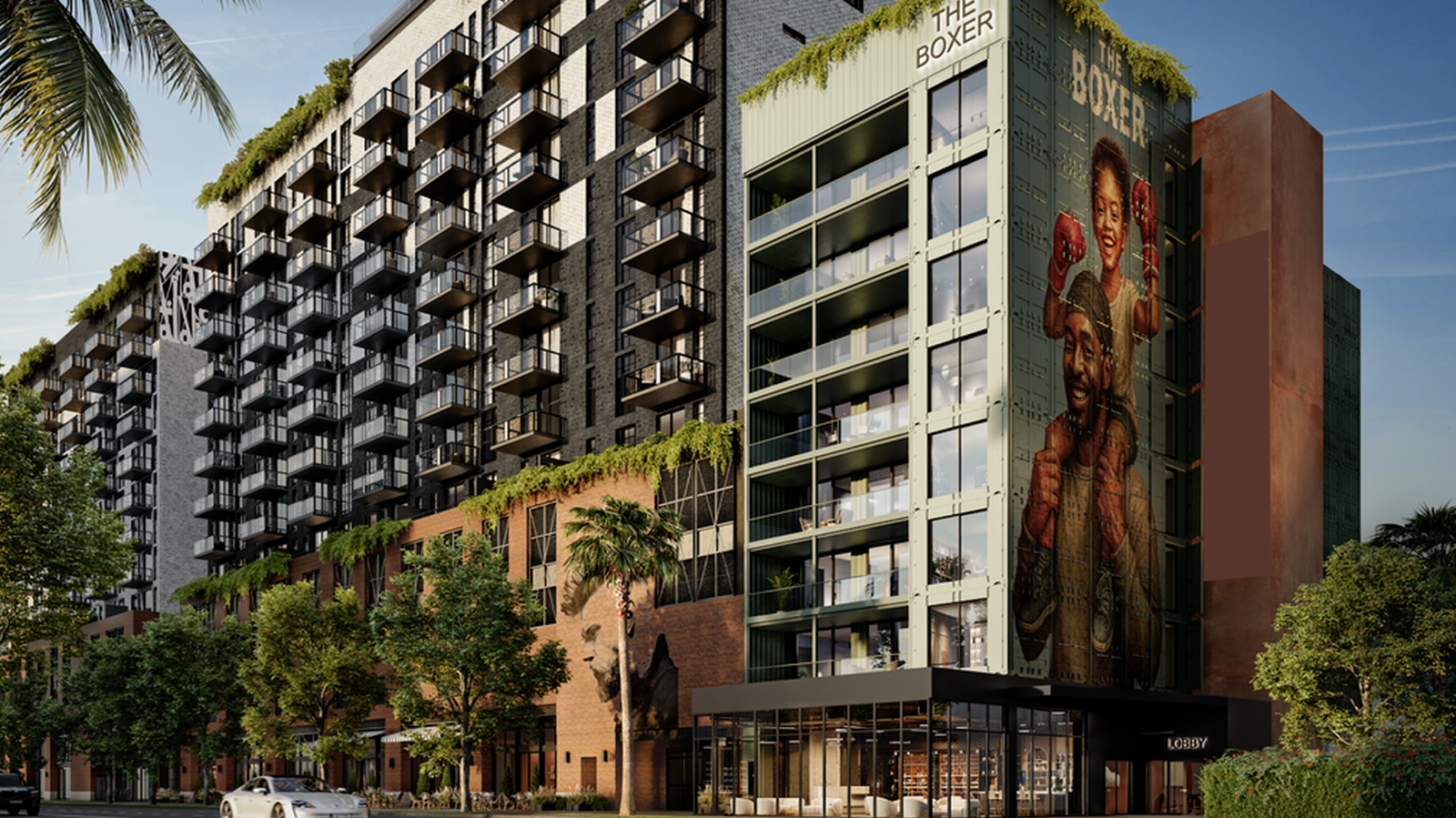
Cipres plans to develop an eight-story building on the site, to be called The Boxer. The project is programmed with 14 income-restricted three-bedroom units, targeting households earning between 80% and 120% of the area median income. In addition to the residential component, the plans include 4,100 square feet of ground-floor retail, bringing a mixed-use element to the property consistent with the broader neighborhood’s active commercial streetscape.
Construction on The Boxer is anticipated to commence within 24 months of the land conveyance, indicating a medium-term delivery timeline rather than an immediate start. The project will sit adjacent to two market-rate developments previously delivered by Cipres, situating the new affordable component alongside existing higher-rent product. This adjacency creates a small cluster of multifamily assets under the same developer within Wynwood.
As part of the agreement with Miami-Dade County, Cipres has also committed to an $800,000 donation to an education-focused nonprofit organization, which will be used to establish an endowed scholarship program for students in Wynwood. This philanthropic component adds an education and community investment layer to the transaction, tying the development to broader neighborhood benefits beyond the addition of new income-restricted units and ground-floor retail space.