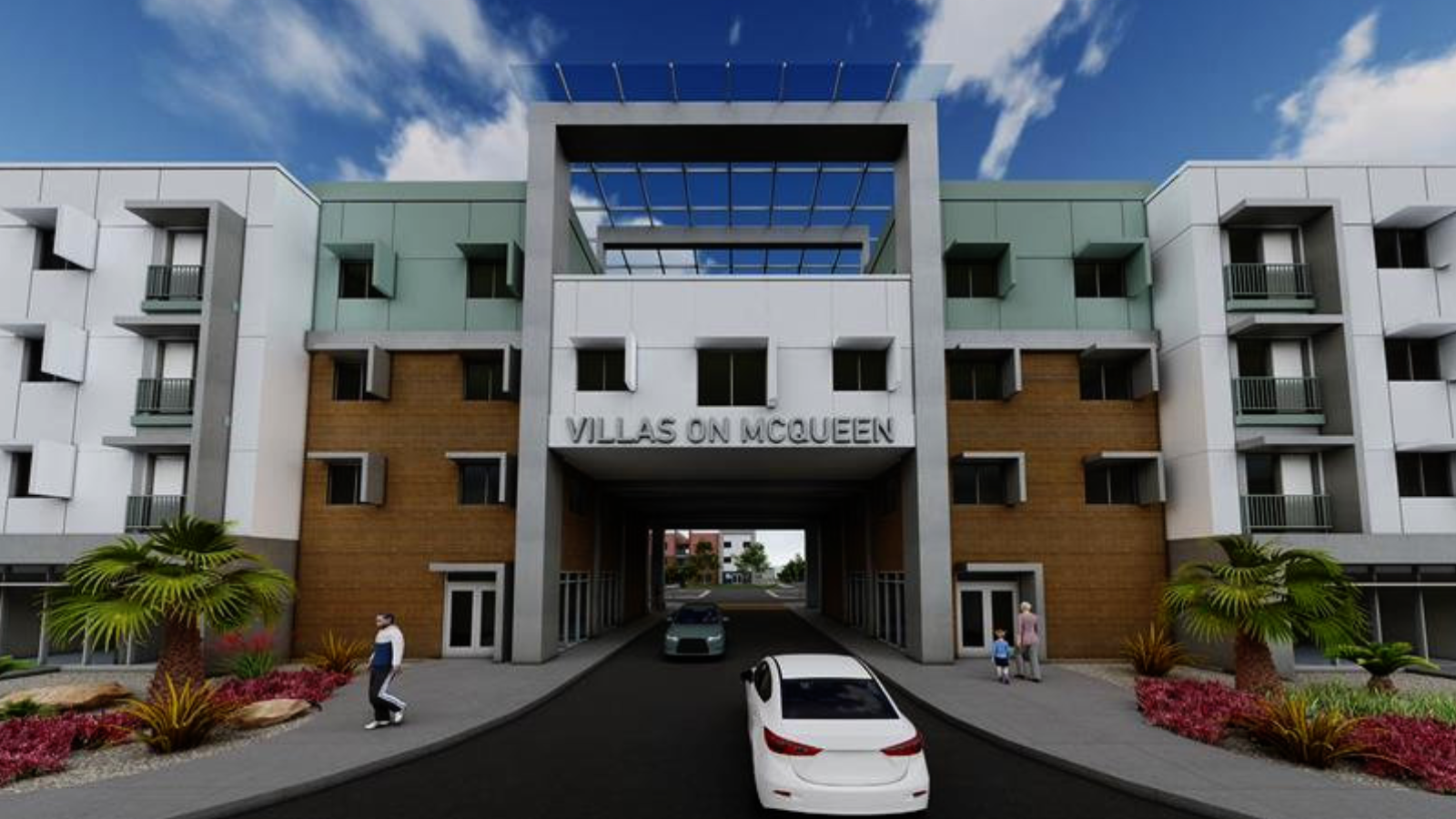
The City of Chandler and Gorman & Company have completed Villas on McQueen, an affordable multifamily community that marks the city’s first public housing conversion under HUD’s Rental Assistance Demonstronstration (RAD) program. The newly delivered development introduces 157 income-restricted apartments and replaces two public housing communities that dated back to 1972 and had served local families for more than five decades.
The $58 million project is structured to accommodate households relocating from the older public housing inventory as well as additional income-qualified residents. A total of 78 households from the two legacy public housing communities are moving into new replacement homes at Villas on McQueen. Those replacement residences span a mix of one-, two-, three-, four- and five-bedroom floor plans intended to support a range of family sizes and housing needs.
Alongside the replacement units, the community adds 79 new affordable apartments that expand the city’s income-restricted housing supply. These additional homes are reserved for households earning at or below 60% of the Area Median Income under the federal Low-Income Housing Tax Credit program. By combining RAD and LIHTC tools, the initiative transitions older public housing assets into a modern capital structure while maintaining long-term affordability commitments.
Financing for Villas on McQueen was assembled from seven distinct funding sources, reflecting the layered capital approach often required for contemporary affordable housing development. Participants include the Arizona Department of Housing, Maricopa County, the City of Chandler, RBC Community Investments, Stonehenge Capital, Capital One, and Cedar Rapids Bank and Trust. Together, these public and private entities supplied the resources needed to demolish and replace the 1970s-era communities with new construction.
The completion of Villas on McQueen provides updated housing options for long-time public housing residents while also increasing the overall inventory of income-restricted units available to qualifying families. The project illustrates how local governments, housing agencies, tax credit investors, and financial institutions can collaborate to upgrade aging public housing stock and preserve affordability through modernized facilities and long-term regulatory frameworks.