Hotel capital is increasingly flowing toward luxury and upscale leisure properties, even as new ground-up development remains constrained by higher borrowing costs and tighter underwriting, according to Walker & Dunlop’s inaugural Hospitality Outlook, “Capital, Divergence, and the Search for Durable Returns.” The report describes a lodging landscape where performance is less about broad national trends and more about property-specific fundamentals.
Walker & Dunlop finds that a widening performance gap is emerging across the hotel sector. Outcomes are being driven by factors such as asset quality, precise location and the demographics of the traveler base, rather than by uniform gains or losses across entire chains or markets. In this environment, capital is concentrating in a narrower set of high-performing submarkets and assets, particularly at the luxury and upper-upscale end of the spectrum.
Jay Morrow, senior managing director of Capital Markets Hospitality Advisory at Walker & Dunlop, notes that hospitality can no longer be evaluated reliably using broad assumptions. He points out that U.S. first-quarter revenue per available room (RevPAR) grew 3.8%, exceeding expectations, but says investors are now focused on micro-level drivers rather than headline statistics. That means more attention on neighborhood-by-neighborhood demand trends and property positioning when deciding where to allocate capital.
The firm reports that investors are scrutinizing the fundamentals of individual neighborhoods and submarkets, weighing specific demand generators such as local business activity, tourism patterns and high-end leisure demand. As a result, capital is not being deployed uniformly across all hotel product; instead, it is following a more selective path toward assets perceived to offer durable cash flows and pricing power.
Managing director Evan Hurd observes that two hotels located in the same city can deliver materially different performance outcomes. According to the outlook, this divergence underscores the importance of identifying resilient micro-locations and then matching capital to those opportunities. The ability to distinguish which submarkets are drawing sustained demand, and which are less resilient to changing travel patterns, is becoming a competitive advantage for investors and lenders.
The report also underscores that elevated financing costs and stricter underwriting standards continue to make new hotel construction challenging, even as investors demonstrate strong appetite for top-tier luxury and upscale leisure assets. This dynamic is contributing to a market in which existing high-quality properties in strong submarkets may benefit from constrained new supply, while ground-up projects face higher hurdles to secure financing.
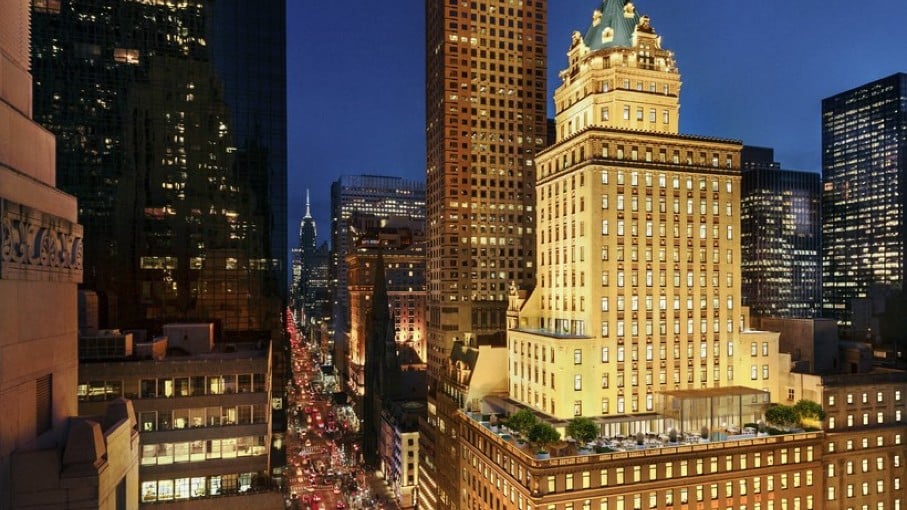
As an example of institutional capital targeting high-end hospitality, Walker & Dunlop highlights its role arranging $754 million of construction financing in 2022 for Aman New York. The project is located on the top 20 floors of New York’s historic Crown Building and illustrates the scale of capital that can still be mobilized for luxury concepts in premier locations. The firm positions this transaction as representative of how select luxury projects can attract substantial funding, even amid tighter overall credit conditions.
Overall, the Hospitality Outlook portrays an industry where performance is increasingly segmented, and where investors must move beyond broad market narratives to evaluate individual assets, micro-locations and demand drivers. For market participants, the themes of capital selectivity, underwriting discipline and a focus on resilient luxury and upscale leisure demand are central to current hospitality investment strategy.