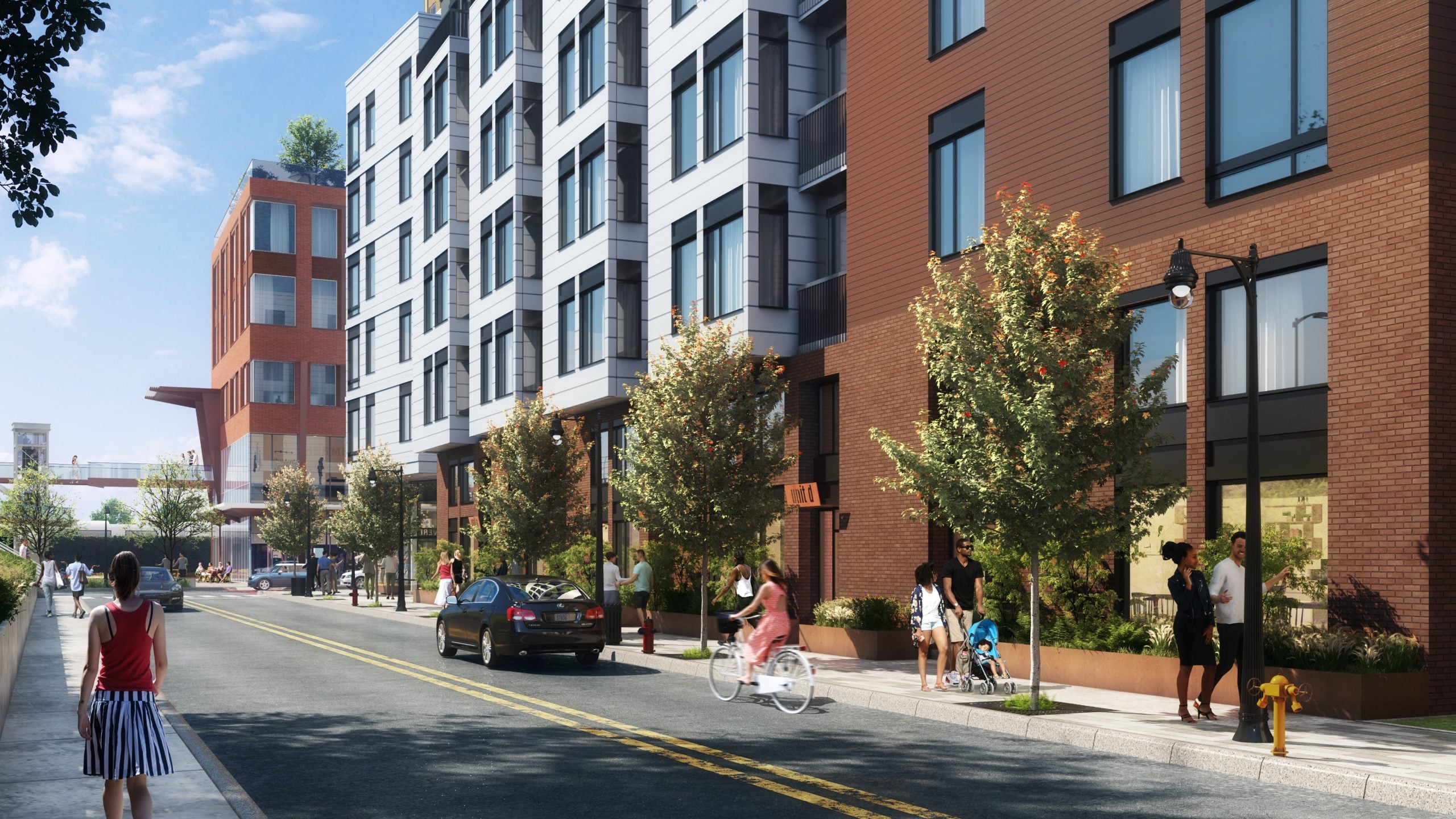
Pennrose has begun construction on a new mixed-income apartment community at 95 Everett St. in the Allston-Brighton neighborhood of Boston. The project is planned as an 88-unit, transit-oriented development and is scheduled to be completed in 2027. Once delivered, the building will provide fully income- and rent-restricted housing in a part of the city described as one of Boston’s fastest-changing neighborhoods.
The residential program at 95 Everett St. will include a range of layouts, with studio, one-, two-, and three-bedroom apartments. All 88 homes in the community will be restricted by income and rent levels. Of these, 73 apartments are designated as LIHTC-eligible affordable units. Within that affordable component, 18 apartments are specifically reserved for households earning at or below 30% of Area Median Income, targeting some of the lowest-income residents in the market. The balance of the units will be reserved for middle-income households, broadening access to attainable housing within Allston-Brighton.
The building is being designed and constructed to align with Universal Design principles, which are intended to make homes more inclusive and accessible for residents with a range of needs and abilities. In addition, the project is planned to meet Passive House sustainability standards, signaling a high-performance, energy-efficient approach to multifamily development. These design choices position the property to offer both long-term operating efficiency and a more resilient living environment for future residents.
Described as a transit-oriented development, 95 Everett St. is positioned to leverage Allston-Brighton’s access to public transportation and nearby employment centers. According to Karmen Cheung, regional vice president at Pennrose, the project responds to significant housing cost pressure in the neighborhood by introducing new high-quality affordable options for working individuals and families. Cheung noted that the area’s transit connectivity, employment opportunities, and community amenities make it a logical location for this type of mixed-income housing.
Rendering materials associated with the project are credited to DiMella Shaffer. Further details on the project budget, capital structure, and specific delivery timeline beyond the planned 2027 completion were not disclosed in the source material, nor were any additional partners, lenders, or future operating details identified. The development remains focused on delivering a fully income- and rent-restricted residential community in a rapidly evolving Boston neighborhood.