
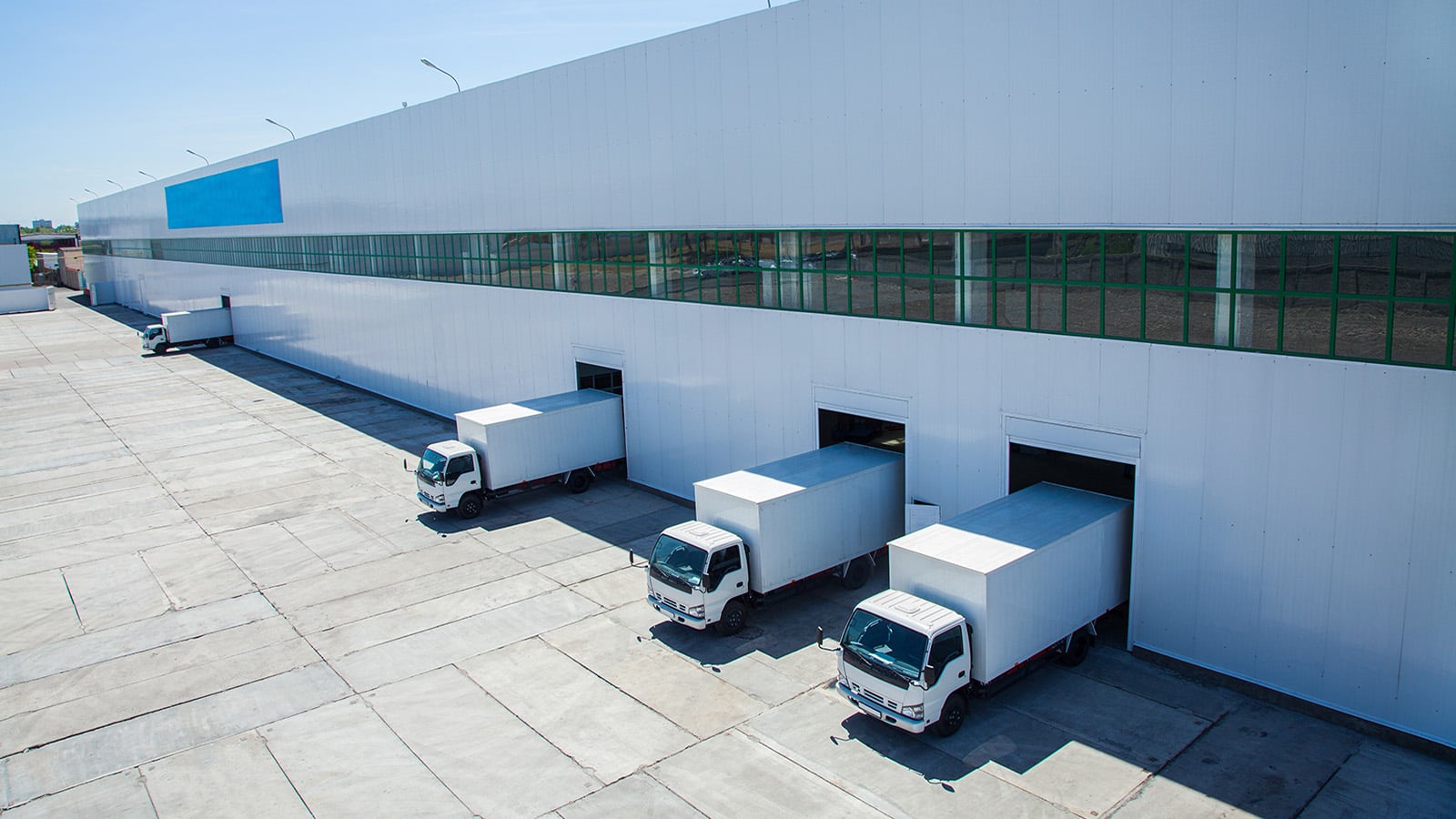
First-quarter U.S. industrial market reports point to a material improvement in fundamentals as demand finally catches up with the recent wave of new supply. Savills’ State of the U.S. Industrial Market report characterizes Q1 as the strongest in several years, citing robust net absorption supported by solid leasing momentum. After a period marked by construction outpacing demand, multiple research groups now see a market moving toward equilibrium.
Colliers’ U.S. Industrial Market Statistics highlights that user demand and new deliveries were closely aligned in the first quarter. CBRE’s U.S. Industrial Figures also notes a shrinking gap between completions and absorption, describing it as a sign of a more balanced environment. JLL’s Industrial Market Dynamics report adds that this tighter relationship between demand and supply, together with the lowest quarterly delivery volume since Q2 2017, indicates the sector is shifting away from prior oversupply.
Across the reports, occupier trends were broadly consistent. Cushman & Wakefield’s U.S. Industrial MarketBeat underscores that a flight to quality is firmly in place, with tenants gravitating toward modern, automation-ready facilities that offer higher power capacity and can support more advanced operations. JLL’s researchers observe that third-party logistics providers are at the forefront of current leasing, arguing that 3PLs have become indispensable partners as occupiers look to manage ongoing supply chain volatility.
Large-format users are also re-entering the market. CBRE points to an uptick in bulk leasing activity among tenants taking 100,000 square feet or more, while Savills notes that large-block leasing has rebounded after a two-year pullback. On the development side, the pipeline is described as disciplined, with build-to-suit and owner-occupied projects representing the primary sources of new space underway.
CBRE analysts report that current construction is heavily concentrated in projects with substantial tenant pre-commitments, reflecting a focus on risk management for developers. Cushman & Wakefield estimates that build-to-suit projects account for roughly 40% of space under construction, and its researchers characterize this as supportive of long-term industrial growth. At the same time, speculative construction remains relevant: approximately 73% of first-quarter deliveries were speculative, up from 71% in 2025.
Macro uncertainty stemming from geopolitical tensions, higher energy costs and economic volatility is weighing on decision-making across commercial real estate, and industrial is no exception. The research suggests some occupiers are postponing expansions or favoring shorter lease terms in the current environment. JLL reports that companies are responding by emphasizing domestic manufacturing and regional distribution to limit exposure to shipping cost swings and geopolitical risk.
Looking ahead, supply and demand are expected to remain relatively tight. Colliers anticipates that limited new supply and consistent tenant demand will apply downward pressure on vacancy in 2026, especially in markets that are already approaching balance. Cushman & Wakefield sees the potential for vacancy to recompress as constrained new deliveries intersect with ongoing logistics demand. While completions should stay modest through 2026, the firm notes that new groundbreakings in strong-demand markets have pushed the national development pipeline higher for three consecutive quarters.