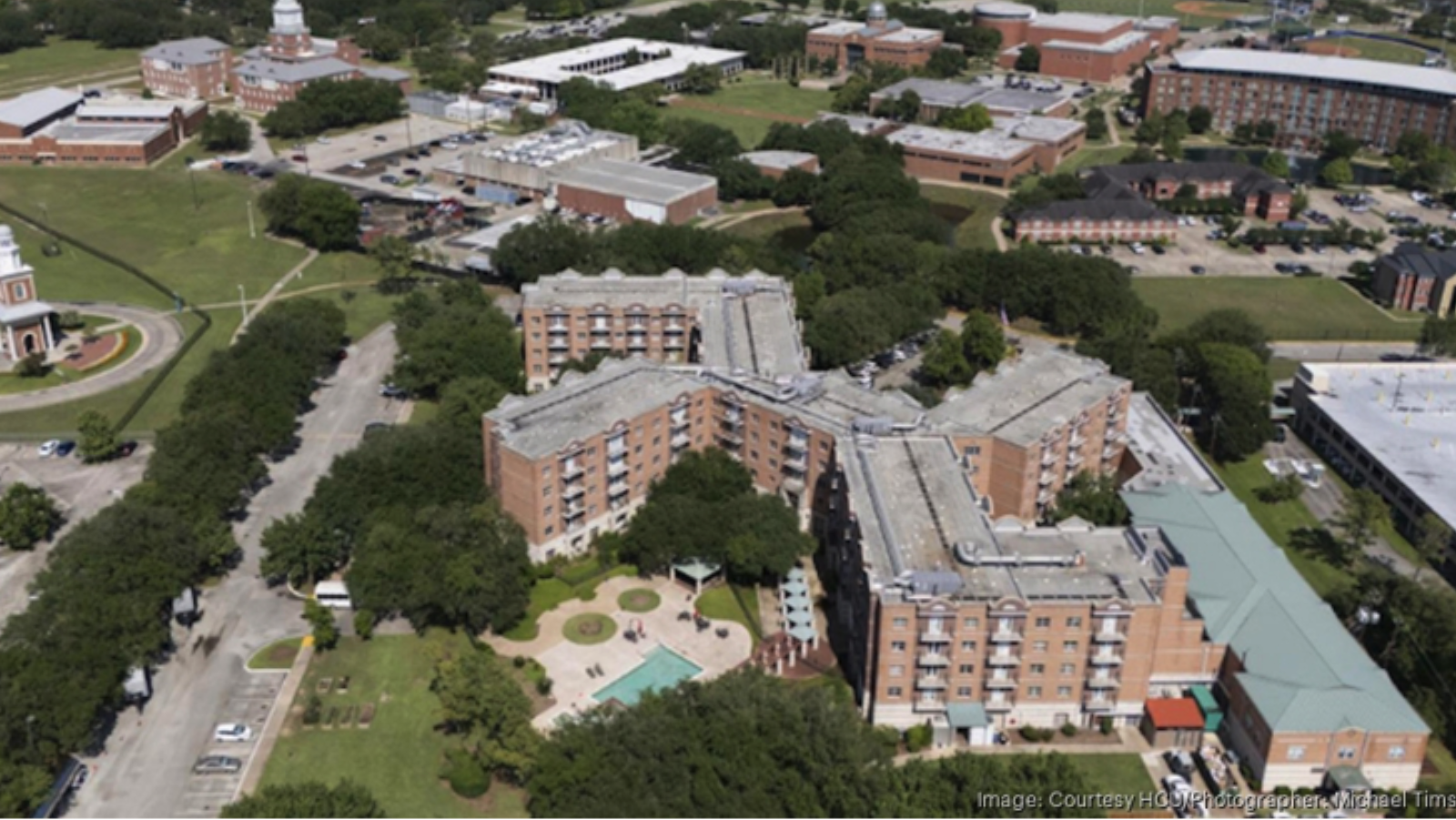
Houston Christian University is moving forward with plans to convert a former senior living facility into new on-campus student housing, expanding capacity in response to rising enrollment and near-full occupancy in existing residence halls.
The property totals 200,000 square feet across five stories and is slated to close as a senior living facility in June, at which point the university will begin a renovation program to adapt the building for student use. The work will reposition the asset from an older-age residential use to a student housing environment while retaining the existing structure.
According to reporting from the Houston Business Journal, the university intends to welcome an initial cohort of 150 students into the building this fall. Those first residents are expected to occupy the third, fourth and fifth floors, which will be prepared in time for the upcoming academic term. Construction work is anticipated to continue on the first and second floors during this period, with those lower levels planned to accommodate most of the building’s common areas once the project is complete.
The refurnishing and refresh of the five-story facility is projected to cost Houston Christian University between $7 million and $10 million. The scope includes interior updates and reconfiguration needed to support student living, though specific design details and a final completion schedule were not disclosed.
The university has engaged Brailsford & Dunlavey, a university-focused planning consultant, to support the project. LAS Architects has also been retained to provide design concepts for the conversion, indicating a coordinated planning and architectural approach to the reuse of the building.
Houston Christian University currently offers 1,052 on-campus beds and reports occupancy of 98%, underscoring tight conditions in its existing housing inventory. Once the conversion is fully delivered, the five-story residential facility is expected to expand on-campus residential capacity by approximately 33% through the addition of an estimated 300 to 350 beds tied to the acquisition of the former senior living property.
The expanded housing supply aligns with recent enrollment growth at the university. Total student enrollment has reached 4,693 students, an increase of 9.75% from 4,276 students in the prior fall term. The combination of strong occupancy in campus housing and rising enrollment is driving the need for additional beds and supports the rationale for repurposing the existing senior living building into student residences.