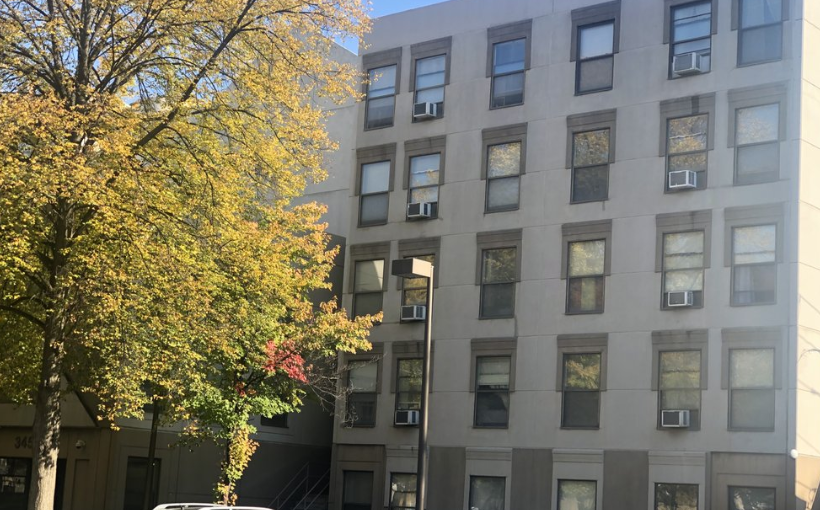
Preservation of Affordable Housing Inc. (POAH) is preparing a substantial rehabilitation of the Corcoran Place Apartments, committing $40 million to upgrade the senior housing complex on the West Side. The property includes 94 apartments across two buildings located at 325 and 345 N. Austin Blvd., and serves an older resident population in an income-restricted setting.
The renovation scope is extensive and targets both unit interiors and building systems. Apartments will receive new kitchens and bathrooms, along with updated flooring. Building-wide work includes installing an all-electric HVAC system, upgrading plumbing and electrical infrastructure, and replacing roofs and windows. The project also calls for significant repairs to the building facades to improve long-term durability and curb appeal.
The capital stack for the renovation blends multiple public and private sources. Funding includes tax-exempt bonds and Low-Income Housing Tax Credits, as well as $15,900,000 in investor equity provided by Hudson Housing Capital. The project also benefits from a $5,580,000 federal grant awarded through the Green and Resilient Retrofit Program, which supports energy-efficiency and resilience improvements in affordable housing communities.
POAH, a Boston-based affordable housing developer and investor, acquired Corcoran Place Apartments in 2019. According to project manager Fatima Benhaddou-Rahim, the organization is investing approximately $190,000 per unit as part of this renovation effort. The per-unit spend underscores the depth of the planned work, which is designed to modernize building systems and extend the useful life of the property while maintaining affordability for seniors.
Construction is being phased by building to minimize disruption to residents. Work at the 345 N. Austin Blvd. building is scheduled to wrap up by the end of the year, while completion of the 325 N. Austin Blvd. building is expected in 2027. Berglund Construction, based in Chicago, is serving as general contractor for the project, overseeing the implementation of both the interior upgrades and the building envelope improvements.
By combining tax-exempt bond financing, Low-Income Housing Tax Credits, investor equity and a federal green retrofit grant, the Corcoran Place project illustrates how layered capital can be used to recapitalize and reposition older affordable senior housing assets while incorporating energy-efficient systems.