**The Evolution of MLB Stadium Locations: From Suburban Isolation to Urban Integration**
In the early 20th century, professional baseball stadiums were often situated in walkable, urban neighborhoods that were easily accessible to local residents and public transit. A prime historical example is Ebbets Field, which once stood in Brooklyn’s Flatbush section. Today, iconic stadiums like Chicago’s Wrigley Field and Boston’s Fenway Park continue to embody this integration within local communities.
This trend shifted dramatically in the 1950s in tandem with suburbanization and the rise of freeway systems. According to a report by JLL titled *The Stadium District Boom*, major league ballparks became “monument-style islands” isolated from urban centers, surrounded by freeways and expansive parking lots. These suburban stadiums, though grand in scale, were rarely frequented outside of game days, due to their remote and auto-oriented locations.
However, the tide is turning. Present-day stadium development focuses on recreating the energy of walkable neighborhoods by including a mix of dining, entertainment, residential, and office spaces—a significant departure from the isolated complexes of the past.
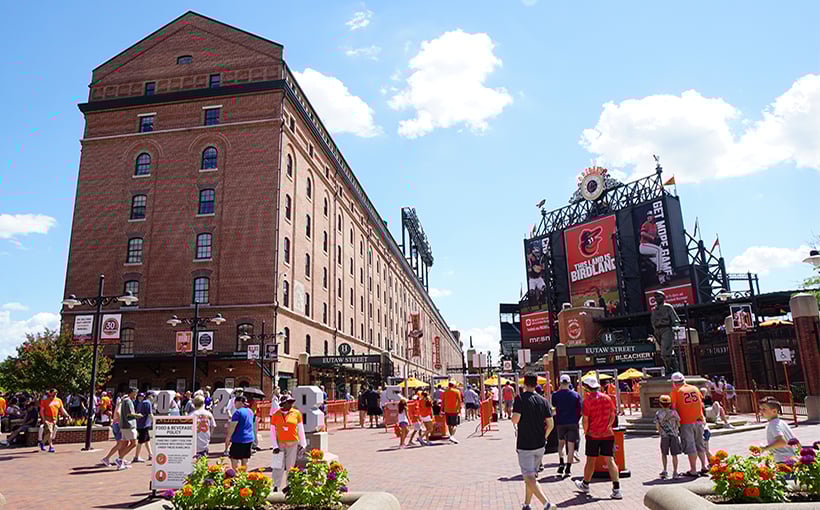
A pivotal change occurred with the development of Camden Yards in Baltimore, completed in 1992 as the new home for the Orioles. The stadium was praised not only for returning baseball to the urban core but also for its design and integration with the surrounding area. JLL noted that the venue restored a sense of character that had been lost in suburban parks.
Following Camden Yards’ example, several MLB teams have embraced similar strategies:
– Truist Park at The Battery (Atlanta Braves)
– Petco Park in the Gaslamp Quarter (San Diego Padres)
– Oracle Park near Mission Bay (San Francisco Giants)
– Coors Field in the LoDo District (Colorado Rockies)
JLL analysts found that this type of stadium district can lead to significantly higher game attendance—about a 20% increase—even among teams with less-than-stellar performance on the field.
While the integration of lifestyle elements helps bolster attendance, it’s not always enough. Globe Life Field, home to the Texas Rangers, illustrates this point. Despite being near entertainment venues, the stadium’s suburban Arlington, TX, location lacks cohesive urban development, making it car-dependent and less inviting for extended visits.
Nonetheless, momentum is building. MLB franchise owners and local governments are increasingly recognizing the value of mixed-use, urban-style stadium developments. JLL analysts predict what they call a “Stadium Arms Race” over the next two decades. By 2040, they forecast that at least half of MLB teams will either build new ballparks or significantly redevelop existing ones to prioritize an immersive and supportive environment.
This shift marks a return to baseball’s roots—a blend of sport, community, and vibrant urban life.