**Tide is Turning for Self-Storage as Supply Glut Eases**
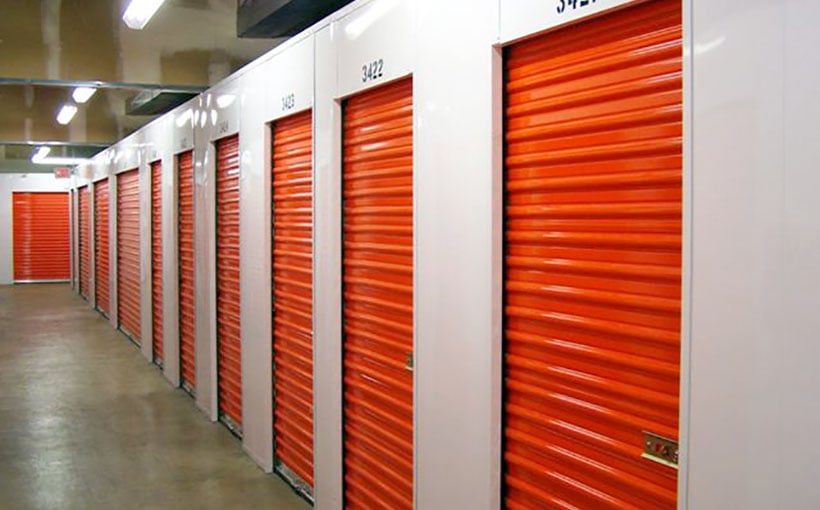
The self-storage sector is closely linked to residential real estate trends. According to Trepp, when people move from one home to another, they often lease storage units—initially as a short-term measure. However, what begins as a temporary rental frequently extends much longer than anticipated. While moving is a major driver of demand for self-storage, it is by no means the only one, though it accounts for roughly half of total demand.
So far, 2024 has been marked by historically weak home sales, leading to a slowdown in self-storage performance. “The self-storage business had been on the outs with investors as supply got well ahead of demand,” Trepp noted. Data from Yardi Matrix reveals that the national supply of storage units grew by 9.4% over the last three years.
However, there are signs that market conditions may be improving. New supply added during the 12 months through May accounted for just 2.9% of inventory. Public Storage, a major player in the field, projects supply growth of only 2.5% for the full year. The U.S. now hosts an estimated 55,000 self-storage properties, with the Southeast potentially having the highest supply per capita, according to self-storage broker Mark Helm.
In its recent report on the sector, Yardi Matrix highlighted strong market performance in the Midwest, especially in cities like Chicago and Minneapolis. An observed slowdown in new supply has supported a quicker recovery in fundamentals in these markets. However, nationally, recovery remains uneven due to continued economic uncertainty and fragility in the housing market. Although investors remain interested, transaction volumes have been muted by elevated interest rates and wide bid-ask spreads.
Encouragingly, Yardi Matrix reported that industry sentiment is on the rise, driven by rent stabilization and a reduction in new development activity. While national rents were down slightly—by 0.1% year-over-year in June compared to decreases of 0.4% in May and 0.3% in April—many metro areas experienced rental increases. Year-over-year, same-store rates for non-climate-controlled units rose in 13 of the top 30 metro markets. For climate-controlled units, 19 of the top 30 cities saw year-over-year gains.
Trepp also cited data from SitusAMC, noting that properties are experiencing slower rent growth due to the recent oversupply. However, valuations appear to have stabilized. Properties located in infill markets—areas that are already largely developed and face limited room for expansion—are seeing improved rent growth and higher customer retention rates.
A new report from Marcus & Millichap, featured by Trepp in its analysis, points to rising insurance costs as a growing concern for self-storage operators. On a more positive note, the same report indicates that the volume of self-storage property sales in the six months through March was higher than during the same period a year earlier. It also reports that debt capital remains readily available, with banks, life insurance firms, and commercial mortgage-backed securities (CMBS) providers actively participating in the sector.
Yardi Matrix also noted that certain markets such as Denver and Charlotte continue to grapple with oversupply. These examples underscore a familiar theme across commercial property sectors: self-storage is ultimately a regional business. Supporting this, Marcus & Millichap’s report offers both national and local insights for investors navigating the evolving landscape of self-storage.